



Every organization dreams of securing the largest deals – those that lead to long-lasting financial gains and a significant reputational boost. But today's enterprise buying landscape has fundamentally shifted. Recent Gartner research reveals that 61% of B2B buyers now prefer a rep-free buying experience, while 69% report inconsistencies between website information and what sellers provide.
The complexity extends beyond buyer preferences. On average, 13 people within an organization are involved in a buying decision, and 74% of B2B buyer teams demonstrate unhealthy conflict during the decision process.
So what does this really mean? Challenges and opportunities for sales professionals who understand how to navigate complex stakeholder environments. Read on for an in-depth guide to the unique challenges of enterprise sales and the key strategies to overcome them.
What is enterprise sales?
Enterprise sales is a strategic approach to selling high-value solutions to large organizations. Unlike transactional sales models, enterprise deals involve longer sales cycles, multiple stakeholders, and significant customization to meet complex buyer requirements.
These deals are also called "complex sales" for good reason. The average enterprise deal involves six to ten decision-makers across departments like IT, procurement, finance, and the C-suite. Each stakeholder brings different priorities, evaluation criteria, and concerns that your sales team must address throughout the B2B sales process.
What distinguishes enterprise sales from other sales motions:

Deal size: Contracts typically range from six to seven figures annually
Sales cycle length: Deals often take three to twelve months (or longer) to close
Stakeholder complexity: Multiple decision-makers and influencers must reach consensus
Customization requirements: Solutions often require tailoring to meet specific organizational needs
Strategic alignment: Buyers evaluate how your solution fits their long-term business objectives
The extended timeline and complexity demand a different skillset from your sales team. Reps must excel at account-based strategies, relationship management, and navigating internal politics within prospect organizations. They also need robust pipeline management to track deal progression across multiple touchpoints and stakeholders.
While enterprise sales require more upfront investment, the payoff is substantial. These partnerships deliver higher customer lifetime value, more predictable revenue forecasting, and opportunities to expand within large accounts over time.
Enterprise sales vs. self-service, SMB, & mid-market sales
Enterprise sales aren't the be-all, end-all when it comes to driving revenue for most organizations. Most companies also rely on self-service, small and mid-sized business (SMB), and mid-market sales, all of which require different mindsets and distinct strategies.
Self-service sales
Self-service sales are characterized by high volume, quick transactions, and customers who can guide themselves through the purchasing journey. Organizations must provide customers with a streamlined and user-friendly experience that helps them navigate the sales process independently. Products and services that rely on self-service models are typically standardized and target customers who have little need for customization.
Self-service sales are well-suited to play a complementary role within your organization's sales strategy. By allowing customers to initiate and complete transactions independently, self-service models free up resources that can be directed toward more complex sales endeavors.
SMB and mid-market sales
SMB sales target smaller organizations where deals often close in days or weeks with one or two decision-makers. Mid-market sales occupy the space between SMB and enterprise, with more variability in client requirements and organizational complexity. Both segments require sales teams to customize offerings while still efficiently navigating the sales process.
These sales motions serve as opportunities for businesses to establish meaningful relationships, gain experience for their sales and fulfillment teams, and build the skills needed for enterprise-level sales.
7 actionable enterprise sales strategies




Successfully pursuing enterprise sales at your organization hinges on adopting and employing strategies that address the unique needs of large companies. These are seven enterprise sales best practices that can help any sales team close the most complex and valuable deals they encounter.
Consider this as a starting framework, but remember, real mastery in enterprise sales comes from hands-on experience and a deeper, ongoing engagement with each concept.
1. Focus on customer relationships
Strong customer relationships are at the core of any successful enterprise sales process. Sales personnel should adopt a consultative approach dedicated to creating personalized and informative interactions. Eighty percent of respondents in one Outreach survey said they would be more likely to purchase a product or service with a consultative sales experienc
To present themselves as consultants effectively, reps should come prepared with relevant data points, be ready to answer questions in real-time, and expertly guide buyers through the intricate buying process. In turn, your company should invest in training its sales team on both the details of clients' industries and your organization’s own offerings. When implemented well, this strategy positions your sales professionals as valued advisors, building trust and fostering a sense of collaboration and partnership.
2. Provide tailored solutions
If an organization is going to spend a significant amount of their budget on your solution — and the time and effort required to adopt it – they’ll expect to receive something tailored to their needs.
Sales reps should work to develop a deep understanding of each enterprise-level client to customize their organization’s offerings to align with their specific challenges and goals. This might translate to building new processes or incorporating custom features that cater specifically to the requirements of enterprise accounts.
Your organization should build flexibility into product development processes so it can swiftly respond to custom requests. By accommodating custom requests and crafting solutions that address the issues faced by large organizations, businesses enhance the perceived value of their offerings and position themselves as flexible and proactive partners.
When presenting tailored solutions, quantify expected ROI through hard savings (cost reductions, efficiency gains) and soft benefits (risk mitigation, competitive advantage) to give financial stakeholders the justification they need to move forward.
3. Identify and cultivate the right prospects
As the size of the deal grows, the pool of potential customers shrinks, so identifying and cultivating the right prospects during the enterprise sales process is critical. This relies on a comprehensive understanding of your organization’s target audience. And it also requires a sales team dedicated to nurturing relationships with individuals at those organizations that align with your buyer personas.
Enterprise buyers now commonly bring multiple decision-makers into the sales process while expecting your sales reps to provide frequent opportunities for touching base. This often leads to a more drawn-out sales cycle and means that sales professionals should leverage a variety of communication channels to stay connected as leads advance through the pipeline. By investing time and resources in understanding and cultivating the right prospects through a consistent, personalized outreach strategy, organizations position themselves to successfully navigate extended sales cycles and evolving buyer preferences.
Consider tiering your target accounts based on revenue potential and strategic fit. Dedicate full account team resources to your highest-value prospects, use targeted outreach for mid-tier opportunities, and manage the rest through scalable sequences – then promote accounts to higher tiers as buying signals strengthen.
4. Involve all decision-makers in the sales process
The companies targeted during the enterprise sales process usually have multiple levels of decision-makers that sales personnel need to win over. Seventy-six percent of buyers say that their CFOs and financial teams are now more involved in the sales process, while 74% say the same about procurement.
Connecting with multiple decision-makers, also referred to as multi-threading, requires sales teams to identify the stakeholders who have real decision-making authority and engage them throughout the sales cycle. Your organization should also involve its own executive team in the sales process when appropriate to demonstrate commitment and ensure your leadership is aligned with the client's goals.
According to Outreach’s proprietary data, deals with multiple sellers assigned actually see a 2 percentage point lift in win rate and close 51 days faster.
Understanding the key stakeholder roles accelerates this process. Map your buying committee by identifying economic buyers (budget authority, focused on ROI), technical buyers (IT/security, focused on integration and compliance), end users (daily workflow impact), and internal champions who can advocate for your solution. Document each stakeholder's priorities, concerns, and communication preferences to ensure every interaction moves the deal forward.
5. Equip your sales team with compelling case studies and success stories
Closing enterprise-level deals requires persuasive evidence in the form of case studies that potential clients can relate to. Compelling case studies bolster the credibility of your company by providing tangible evidence of the value and impact of its solutions. Building and communicating these success stories is a collaborative effort between marketing and sales.
These teams should regularly update case studies on the company website, incorporate them into sales presentations, and maintain internal customer reference lists for sales personnel to leverage. This approach ensures that the sales team is well-equipped to illustrate the practical benefits of your organization’s offerings in a way that resonates with potential clients.
Structured pilot programs accelerate enterprise deals by reducing buyer-perceived risk. Define clear success criteria tied to business outcomes (not feature demos), limit scope to 30-90 days, secure executive sponsorship from both sides, and document quantified results throughout. POCs with measurable outcomes convert at higher rates while maintaining pricing integrity.
6. Develop a successful enterprise sales team
Building a sales team equipped to close large-scale deals encompasses strategic hiring, comprehensive training, and establishing the right roles. Your company should recruit individuals with a strong understanding of the enterprise sales landscape and a proven track record of closing the largest deals. Then invest in that talent by providing training opportunities tailored to addressing the challenges posed by major clients.
Specialized roles, like enterprise sales managers, solution architects, and account executives, can also play a crucial role in navigating the complexities of large deals. As your enterprise sales endeavors progress, collect and analyze key metrics, such as win rate and customer acquisition cost (CAC), and fine-tune your sales strategies to keep your sales team on track for success at the enterprise level.
7. Adopt a enterprise sales platform
Finally, the complexity of enterprise sales demands a platform with features that go beyond those of a traditional customer relationship management (CRM) system. Your organization should conduct thorough research to identify an enterprise sales platform that aligns with its needs and goals.
Look for a solution that leverages the capabilities of modern AI, acts as a centralized hub for managing deals, automates outreach, and tracks engagement across the entire sales pipeline. It should also provide sales teams with real-time analytics that make it easy for them to continually optimize their approach for each client. Ensure that the platform integrates with your organization’s existing systems and provides onboarding support for the entire sales team during the implementation process.
Succeed in enterprise sales with Outreach
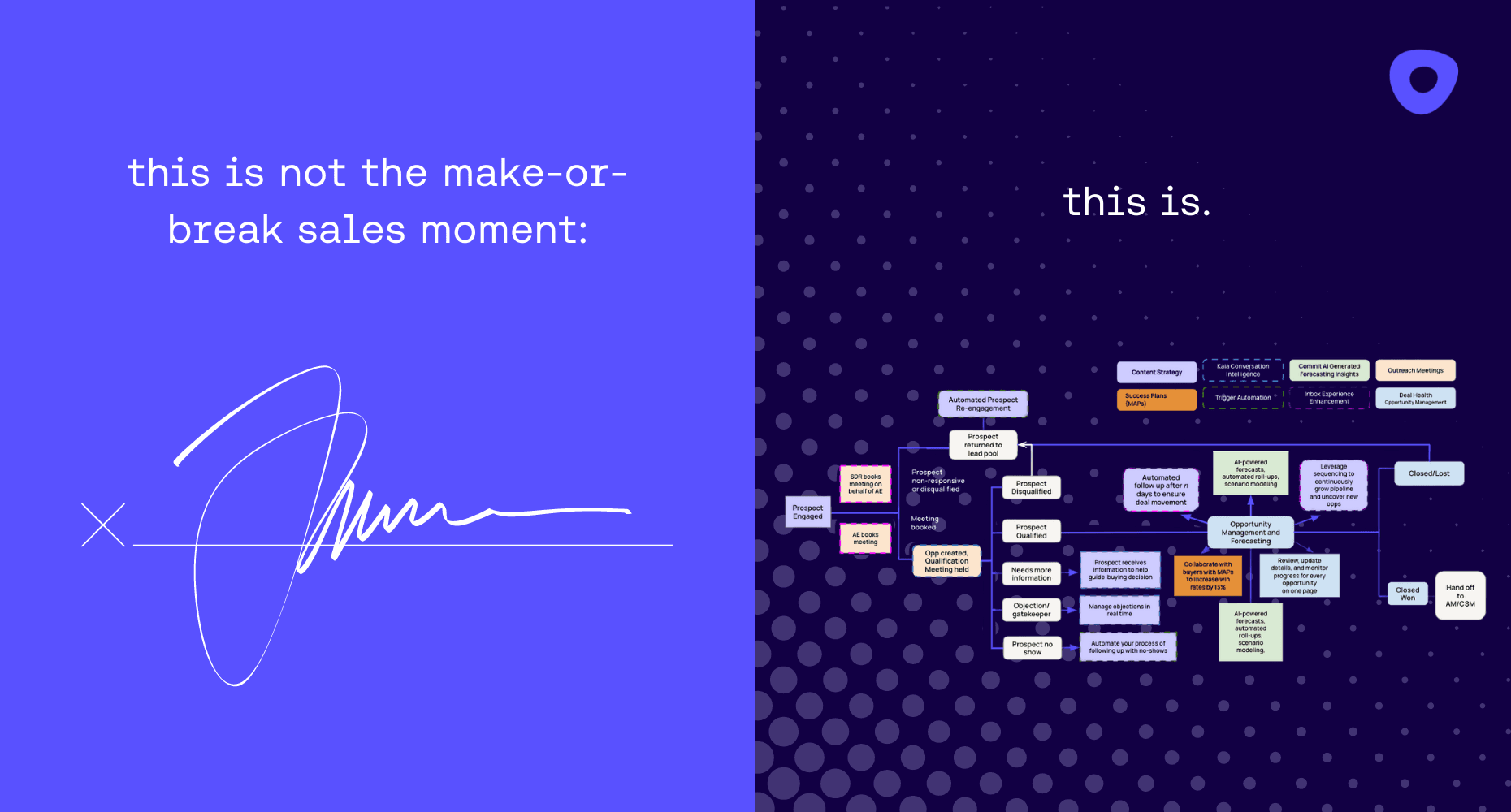
If your organization wants to drive revenue using enterprise sales, it first needs to empower its sales team with a platform designed to help them execute at the highest level. Outreach is an AI Revenue Workflow Platform dedicated to unlocking seller productivity and closing the most valuable sales opportunities. It includes everything needed to design, measure, and improve sales workflows in a single platform, from pipeline management and sales forecasting to rep coaching and AI-powered conversation intelligence. Outreach gives every member of your sales team, from leadership on down, the tools and insights needed to increase deal velocity and close more pipeline.
It includes everything needed to design, measure, and improve sales workflows in a single platform, from pipeline management and sales forecasting to rep coaching and AI-powered conversation intelligence. Outreach gives every member of your sales team, from leadership on down, the tools and insights needed to increase deal velocity and close more pipeline.
Why multi-user team selling is the key to enterprise win rates
Enterprise deals aren’t won by a lone champion. They require multi-threading across 10+ stakeholders, months-long sales cycles, and tailored solutions. Our Team Selling Playbook will walk you through how to implement a team-based, multi-user sales approach for enterprise deals.
Enterprise sales FAQs
What are the main challenges of enterprise sales?
Enterprise sales has several challenges, as it involves longer sales cycles (6-18 months), larger buying committees (often 10+ stakeholders), and the need for customized solutions. Sales teams must build consensus across multiple decision-makers with competing priorities while navigating complex procurement, legal, and security requirements.
How should companies train their sales teams for enterprise sales?
Companies should train their sales teams for enterprise sales by focusing on industry knowledge, multi-stakeholder relationship management, and consultative selling techniques. Combine scenario-based training with AI-powered tools that provide deal insights. Emphasize discovery skills, business acumen, and the patience required for extended sales cycles.
Why is relationship-building crucial in enterprise sales?
Enterprise deals require trust across multiple stakeholders over months-long cycles. Strong relationships help sales teams understand organizational dynamics, identify internal champions, navigate objections, and maintain momentum. These connections often lead to expansions, renewals, and referrals that compound over time.
How do tailored solutions improve enterprise sales success?
Enterprise buyers expect solutions customized to their specific challenges, integration requirements, and strategic goals. Tailored offerings demonstrate a deep understanding of the client's business, differentiate you from competitors, and justify premium pricing by directly addressing the buyer's quantified pain points.
What role does an enterprise sales platform play in closing deals?
A unified platform eliminates data silos, coordinates multi-threaded engagement, and provides real-time deal intelligence across extended sales cycles. It helps teams track stakeholder interactions, automate personalized outreach, and surface risks before they stall deals.


Stay up-to-date with all things Outreach
Get the latest product news, industry insights, and valuable resources in your inbox.